跳到内容
跳到内容 

Tired of your floating platform feeling like a wobbly raft? A shaky surface ruins the fun and feels unsafe. But a few simple tricks can make it rock-solid.
To make your floating platform more stable, ensure it's inflated to the correct PSI (6–10 PSI), choose the right thickness for your needs, anchor it securely from multiple points, and distribute weight evenly across the surface. Proper inflation is the most critical first step.
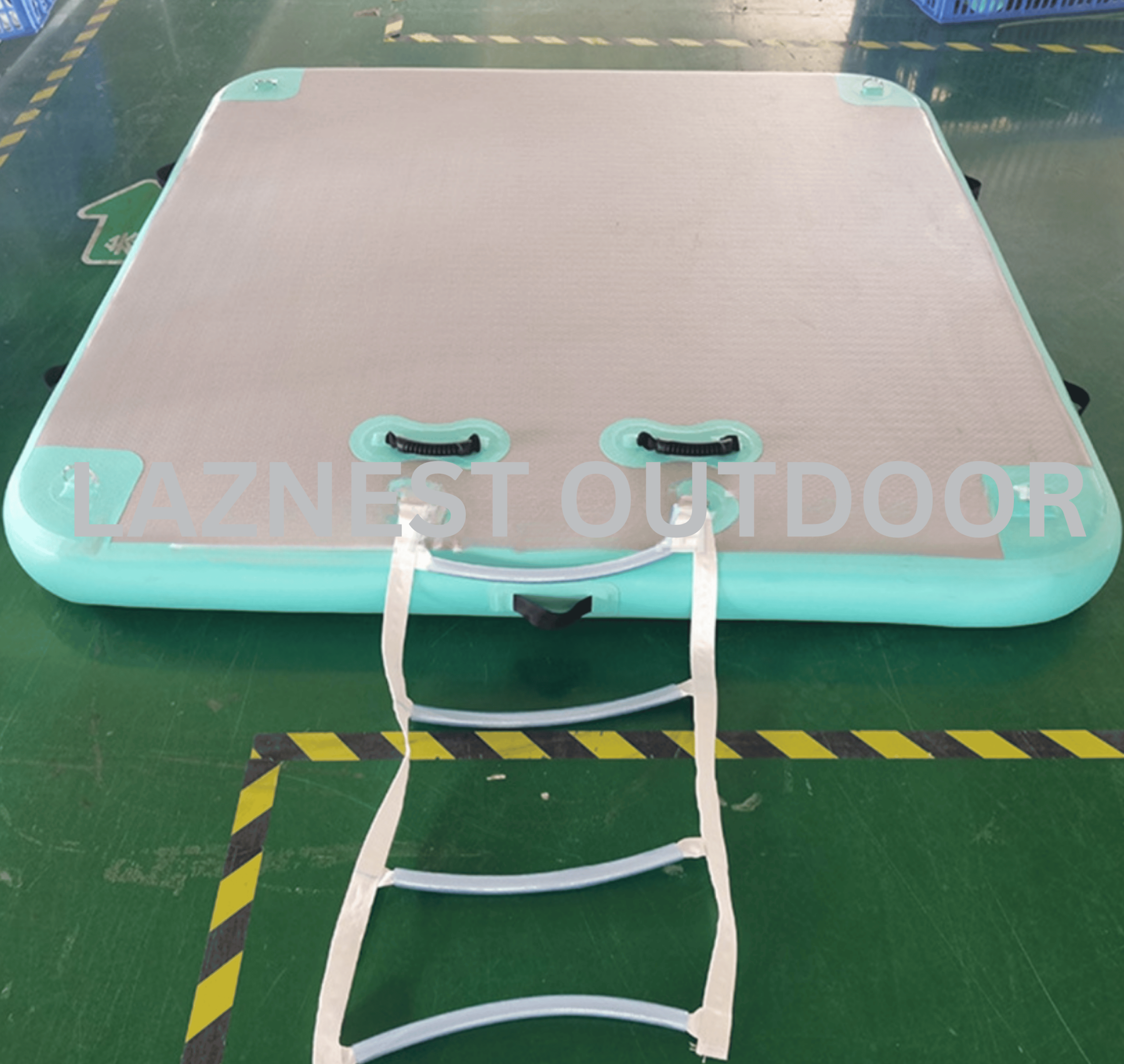
I've seen so many clients struggle with this. They invest in a great platform but a few setup mistakes make it feel unstable. It's a common problem, but thankfully, the fixes are easy. I'll walk you through everything I've learned over the years to get that perfectly stable, enjoyable experience on the water. Let's dive into the details.
Is your platform's air pressure the real reason it's wobbly?
You pump up your platform until it feels hard, but it still wobbles. This is frustrating and makes you doubt the product. The issue is likely incorrect air pressure.
Yes, improper air pressure is the most common cause of instability. Most platforms need 6–10 PSI, but people often only inflate to 2–3 PSI. Use an electric pump with a gauge for an accurate reading. Never judge by feel alone, as this is highly inaccurate.
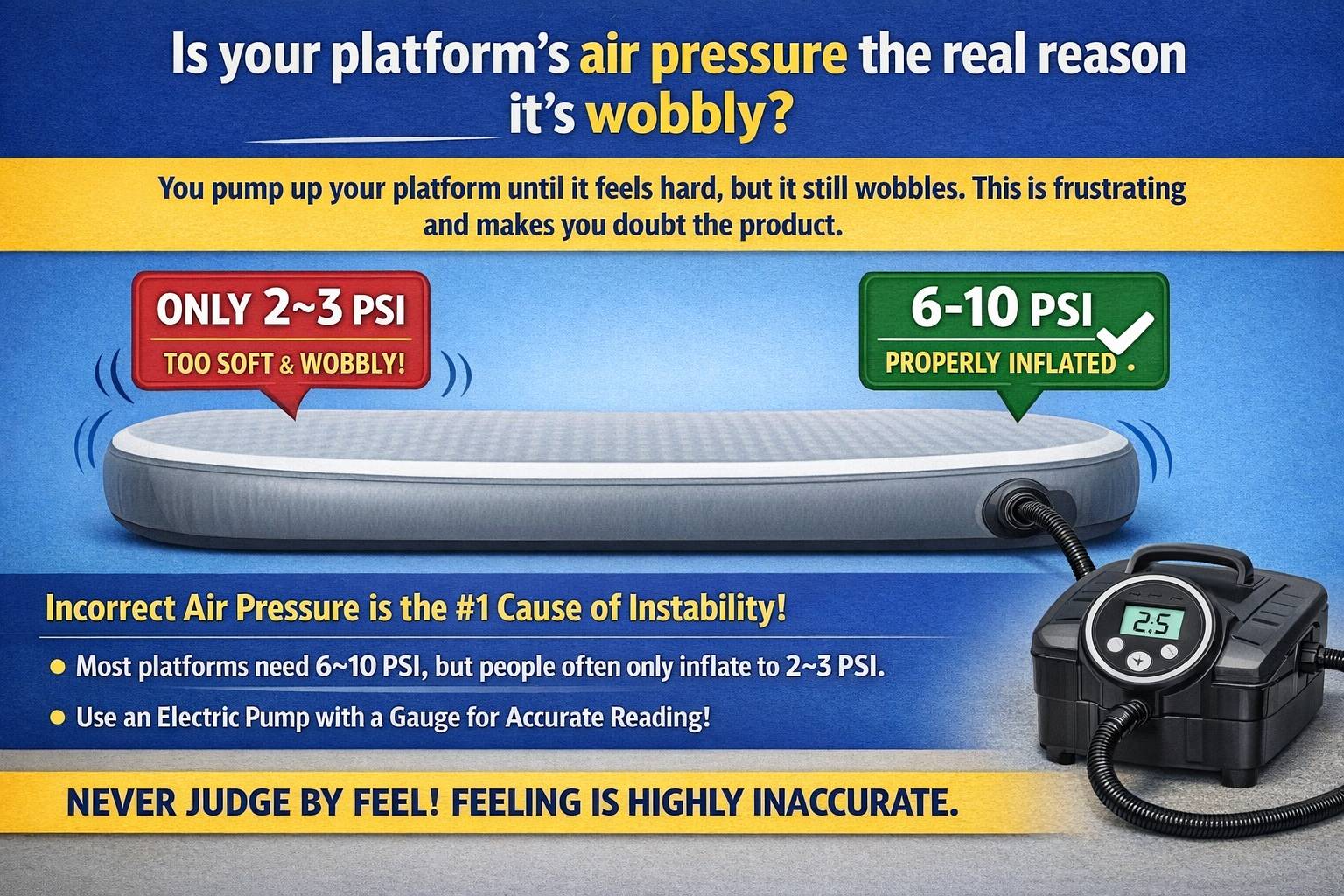
I get this question all the time. A customer calls me and says their platform is "too wobbly." My first question is always, "What PSI did you inflate it to?" The answer is often "I don't know, I just pumped until it felt hard." This is the number one mistake. Without the right pressure, everything else you do for stability is pointless. The internal drop-stitch structure needs that high pressure to become rigid and create a solid surface. At only 2 or 3 PSI, the platform is still too soft to handle weight and waves effectively. It will flex and feel unstable under your feet. This is why investing in the right tool is so important.
The Right Tools for the Job
You need an electric pump with a built-in pressure gauge. This takes all the guesswork out of inflation. You simply set your target PSI, usually between 6 and 10 PSI for most platforms, and let the pump do the work. It will automatically shut off when it reaches the correct pressure. This ensures a perfectly rigid and stable platform every single time. It's a small investment that makes a huge difference in performance.
Common Inflation Mistakes
Judging pressure by hand or foot is completely inaccurate. A platform can feel hard to the touch at just 3 PSI, but this is not nearly enough for proper stability. You also need to account for temperature changes. If you inflate your platform in the cool morning air, the pressure will increase as the sun heats it up during the day. The opposite is also true. A good practice is to check the pressure again after it's been in the sun for an hour and adjust if needed.
| Common Mistake | Best Practice |
|---|---|
| Guessing pressure by feel | Use an electric pump with a pressure gauge |
| Only inflating to 2–3 PSI | Inflate to the recommended 6–10 PSI |
| Not checking pressure again | Check and adjust pressure after an hour in the sun |
How do thickness and anchoring affect your platform's stability?
You've checked the pressure, but your platform still moves too much with waves. You worry it's not safe for your family or clients. The problem might be its thickness or anchoring.
A thicker platform provides more buoyancy and rigidity, resisting bending. Anchoring from at least four points prevents drifting and reduces movement from waves. For commercial use, choose a 20cm thickness and use six anchor points for maximum stability, especially in open water.
After you've mastered inflation, the next step is looking at the physical properties of your setup. If you've inflated your platform to 10 PSI and it still feels too bouncy or flexible, especially with multiple people on it, the issue might be thickness. Think of it like a wooden plank. A thin plank will bend easily in the middle, while a thick beam is much more rigid. The same principle applies to inflatable platforms. A thicker platform has more internal volume and structure, which makes it more resistant to bending and flexing under load and from wave action. This is why choosing the right thickness for your specific use case is so important from the start.
Choosing the Right Thickness
As a manufacturer, we offer different thickness options because we know one size doesn't fit all. If a customer tells me their platform feels "bouncy," my first recommendation is to upgrade the thickness, not just add more air. More air can't fix a platform that is too thin for its intended load.
| Use Case | Recommended Thickness | Why? |
|---|---|---|
| Personal / Leisure Use | 10–15 cm (4–6 inches) | Perfect for a few people, easy to handle. |
| Commercial / Multi-Person | 15–20 cm (6–8 inches) | More rigidity for groups, yoga classes, or parties. |
| Heavy-Duty / Open Water | 20 cm+ (8+ inches) | Maximum stability for heavy loads or choppy sea conditions. |
The Art of Anchoring
Anchoring is your platform's connection to the world. Poor anchoring will let it drift and get pushed around by every small wave. You need to create a stable base. The minimum is four anchor points, one at each corner. For rougher water or commercial use, I always recommend six points: one on each corner and one in the middle of each long side. This creates a web of stability that holds the platform securely in place. Use shock cords with your anchors. These elastic ropes absorb the energy from waves, preventing jarring tugs on the platform. And remember, don't pull the lines completely tight. A little slack allows the platform to ride the waves gently instead of fighting them.
Can you increase stability by connecting multiple platforms?
Your single platform feels a bit small and unstable for a party. You want more space but worry it will make things worse. Actually, connecting platforms is a great solution.
Yes, connecting multiple platforms significantly increases stability. The combined mass and larger surface area distribute weight and forces more effectively, creating a much more solid base. Use D-rings and straps to link them securely, turning several small platforms into one large, stable island.
This is one of my favorite pro-tips, especially for our B2B clients who host events or need large, modular setups. It seems counterintuitive, but adding more platforms actually makes the entire system more stable, not less. The physics is simple: more mass is harder to move. When you connect two or three platforms, you create one single, heavier object. This combined mass has more inertia, so it's less affected by the movement of a single person or a small wave. You're also creating a much larger surface area, which helps to distribute forces more evenly across the water. Instead of one small platform taking the full impact of a wave, the force is spread across the entire connected structure.
The Power of Connection
The key is to connect the platforms correctly. All of our platforms come with heavy-duty stainless steel D-rings. You can use simple, strong straps to lash the platforms together tightly through these D-rings. For clients who need a more permanent or seamless solution, we can design and manufacture custom connection pieces as part of our OEM and ODM services. This allows you to create massive, stable activity areas on the water. We've helped clients build everything from floating event stages to huge multi-slip docks for jet skis, all by connecting standard platforms.
The Importance of a Good Surface
While you're thinking about the overall structure, don't forget the surface your guests are standing on. An unstable person creates an unstable platform. That's why we use a high-quality, non-slip EVA foam deck on our products. It often has a beautiful teak wood look, but its main purpose is safety and stability. This decking gives your feet excellent grip, even when wet. When people feel secure and are not slipping, they don't need to constantly shift their weight to stay balanced. This lack of sudden movement translates directly to a more stable platform for everyone.
How does distributing weight correctly make your platform feel solid?
Everyone crowds onto one side of the platform for a photo, and it suddenly dips and feels tippy. This can be alarming. The problem isn't the platform; it's weight distribution.
Proper load distribution is key to stability. Keep heavy items like coolers and tables in the center. Encourage people to spread out evenly instead of gathering on one edge. A balanced load keeps the platform flat on the water, preventing tipping and wobbling for a safer experience.
This final point is all about managing the center of gravity. Think of your platform like a small boat. If everyone stands on one side, that side will dip low into the water and it will feel very tippy. If everyone is spread out, the boat stays flat and stable. Your inflatable platform works the exact same way. Its stability depends on keeping the weight balanced and centered. I once worked with a client who wanted to host yoga classes on our platforms. We spent time planning how the instructor would arrange the students symmetrically to maintain perfect balance throughout the class. This principle is crucial for any activity, from a small family gathering to a large commercial party.
The Center of Gravity Rule
The goal is to keep the heaviest items in the middle. This applies to both people and gear. If you bring a heavy cooler, a table, or other equipment onto the platform, place it directly in the center. This anchors the platform's center of gravity and makes it much more resistant to tipping. When people are on the platform, encourage them to spread out. If a group gathers on one edge to look at something in the water, the platform will dip. It's a simple habit to get into, but it makes a world of difference in how stable the platform feels.
Practical Load Distribution Tips
| Do | Don't |
|---|---|
| Place heavy items like coolers in the center. | Pile all your gear on one side. |
| Ask people to spread out evenly. | Let everyone crowd onto one edge. |
| For activities, arrange people symmetrically. | Allow sudden, one-sided movements. |
| Maintain a balanced load at all times. | Ignore how weight is distributed. |
By managing the load on the surface, you are actively controlling the platform's stability. It ensures a safe, comfortable, and enjoyable experience for everyone on board and is the final piece of the puzzle to creating a rock-solid floating base.
Conclusion
In short, a stable platform comes from correct inflation, proper thickness, smart anchoring, and balanced weight. Master these four areas, and your experience on the water will be perfect.